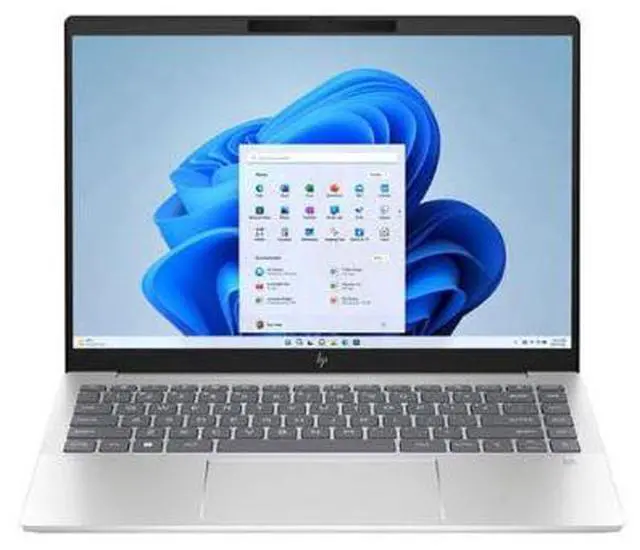
Razer Razer Blade 16 (2024, RTX 4080)vsHP Pavilion Plus 14 (Intel)
Full specification comparison, benchmark scores, and AI verdict — powered by GadgetDisc.
Full specification comparison, benchmark scores, and AI verdict — powered by GadgetDisc.
AI Verdict
The Razer Razer Blade 16 (2024, RTX 4080) leads with an overall score of 79/100, 2 points ahead. It scores higher ingaming, display quality.
Overall Score
✓79/100
77/100
Gaming Score
✓100/100
48/100
Productivity Score
81/100
✓84/100
Display Score
✓88/100
76/100
Portability Score
66/100
✓82/100
Value Score
60/100
✓98/100
CPU Model
Intel Core i9-14900HX
Intel Core Ultra 5 125H
CPU Cores
✓24 cores
14 cores
Boost Clock
✓5.8 GHz
4.5 GHz
GPU Model
RTX 4080
Intel Arc Graphics (H-series)
VRAM
12GB
—
RAM
✓32GB DDR5
16GB DDR5
Storage
✓1000GB PCIe Gen4 NVMe SSD
512GB NVMe SSD
Screen Size
16"
14"
Panel Type
OLED
OLED
Refresh Rate
✓240Hz
120Hz
Resolution
2560×1600
2880×1800
Touch Screen
Yes
Yes
HDR
Yes
No
Weight
2.45 kg
✓1.5 kg
Thickness
21.9mm
✓17.9mm
Battery Capacity
✓95Wh
83Wh
Battery Life
7hr
✓14hr
WiFi
Wi-Fi 7
WiFi 6E
Bluetooth
5.3
5.3
USB-A Ports
✓3×
1×
USB-C Ports
2×
2×
Thunderbolt
Yes
Yes
HDMI
2.1
2.0
SD Card
Yes
Yes
Starting Price
$2,999
✓$1,000
Based on our AI scoring, the Razer Razer Blade 16 (2024, RTX 4080) scores 79/100 overall, 2 points higher than the HP Pavilion Plus 14 (Intel). However, the best choice depends on your use case — gaming, portability, display quality, and budget all factor in.
The Razer Razer Blade 16 (2024, RTX 4080) starts at $2,999 and the HP Pavilion Plus 14 (Intel) at $1,000. That's a $1,999 price difference.
Both laptops have OLED panels. The Razer Razer Blade 16 (2024, RTX 4080) has a higher 240Hz refresh rate vs. 120Hz on the HP Pavilion Plus 14 (Intel) — better for gaming and smooth scrolling.
The HP Pavilion Plus 14 (Intel) is lighter at 1.5kg vs. 2.45kg for the Razer Razer Blade 16 (2024, RTX 4080).
Add up to 4 laptops to the interactive compare tool to see a full side-by-side breakdown with scores.